
Power costs on a pumping lease
Electricity is one of the largest costs of lifting a barrel from an old well. Most leases have never looked at it closely.
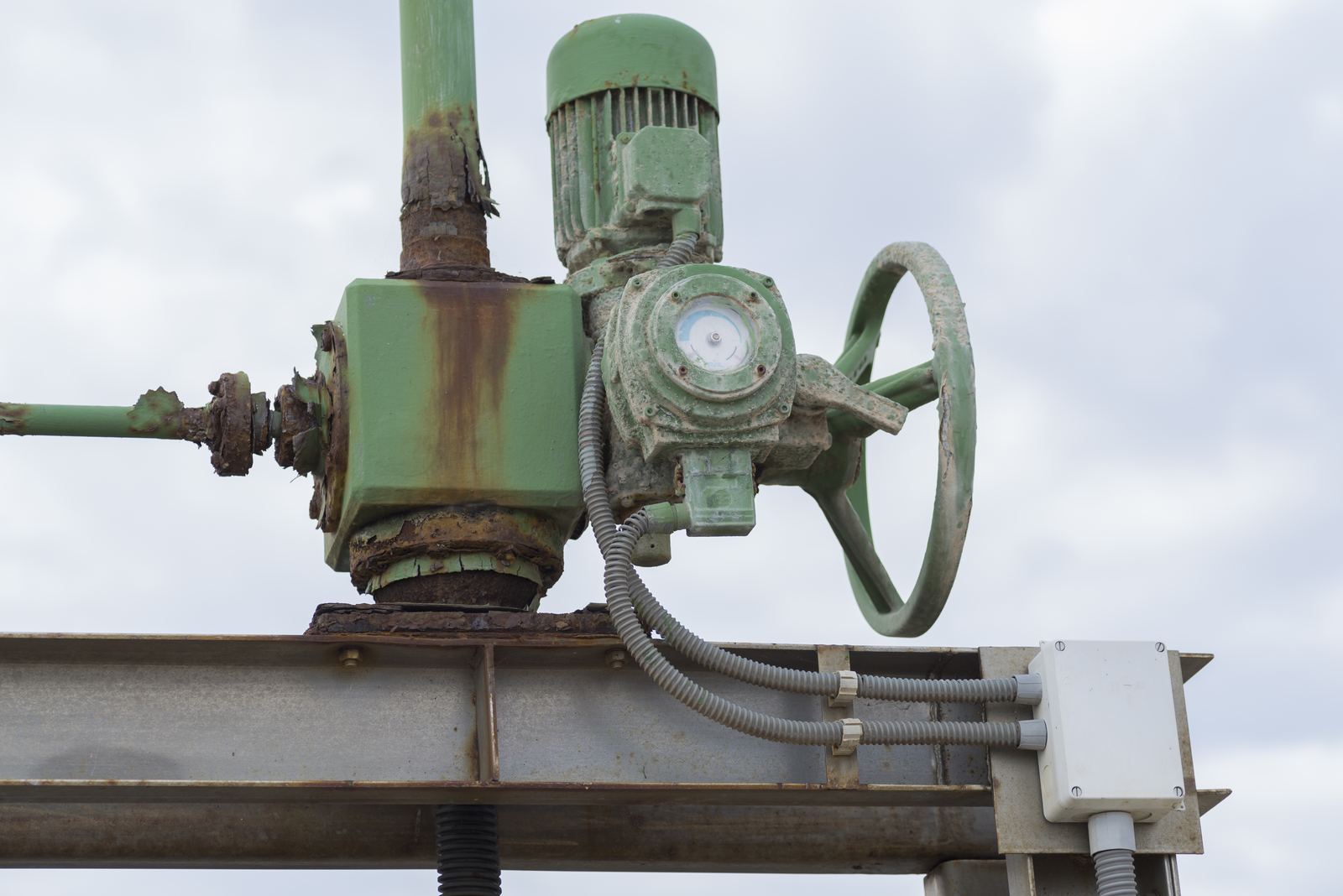
Where the power goes
A pumping unit's motor lifts a column of fluid and a string of steel rods, thousands of times a day. On an old well making mostly water, most of that energy is spent lifting water. The bill does not care how much of the fluid was oil.
Run only when there is something to lift
The most common waste is a pump that keeps stroking after it has emptied the wellbore. A simple timer helps. Matching the cycle to how fast the well refills helps more. This costs almost nothing and usually saves the most. It also saves rods and pumps, which are the bigger expense.
Balance the unit
The counterweights on a pumping unit are there so the motor works about as hard on the upstroke as on the downstroke. Over the years, as the fluid level and the pump change, a unit drifts out of balance and the motor wastes energy fighting it. Rebalancing is an afternoon's work.
Right-size the motor
Many old wells have motors sized for what the well made decades ago. An oversized motor running at a fraction of its rating is inefficient. When a motor needs replacing anyway, replace it with the size the well needs today.
Variable speed drives
A drive lets the unit run slower instead of stopping and starting, and softens each start. On the right well it lowers power use and mechanical wear. On a very small well it may never pay for itself. This is a decision to make with numbers.
Read the bill
Rural power bills often include a demand charge based on the highest draw in the month, as well as the energy used. Staggering the start times of several wells can reduce it. It is also worth asking the utility or co-op whether the lease is on the right rate for how it now operates.
Solar at the location
A small array beside the well can offset part of the use. Whether it pays depends on the rate, the utility's rules for crediting power and the cost of the installation. Measure what the well uses first.
Measure per well
None of this can be managed from one bill for a whole lease. Knowing what each well uses, and what each barrel costs to lift, turns power from a fixed cost into something that can be worked on. That is the first thing we set up. More on how we handle power.
Field notes are general information, not legal, tax or investment advice. Talk to your own advisor about your situation.
Call us. A person answers.
The software does the watching and the arithmetic. It does not answer the phone, make you an offer or decide anything about your wells. People do that.
Write to us
1001 Farnam St, Suite 201, Omaha, NE 68102