
How we run the wells we own.
These are the standards we hold on every lease. They are written down, the system tracks them, and you are welcome to ask how we are doing against any of them.
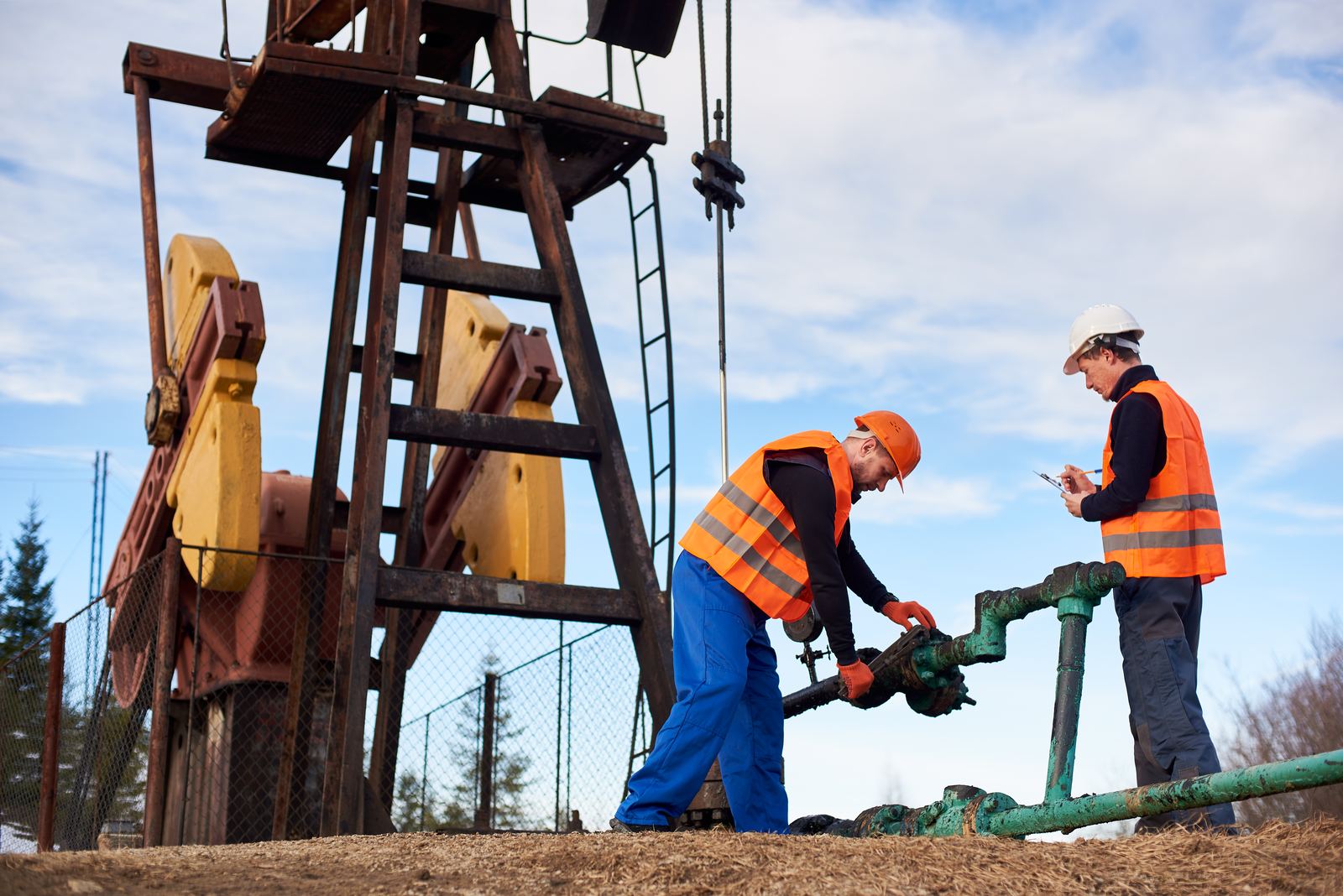
A pumper on the lease every day
Software does not replace boots on the location. A pumper visits each lease daily and records tank gauges, run hours and anything out of the ordinary in a phone app that works without signal. His readings are checked against the sensors, and the sensors against him.
We keep the pumper who already knows the lease whenever he is willing. He knows which well is temperamental in cold weather and which gate sticks. That is worth more than anything we can install.
Uptime tracked well by well
Every hour a well is down is recorded with a reason: power, mechanical, weather, waiting on a rig. A stopped well gets noticed within the hour and has an owner until it is running again.
The reasons matter as much as the hours. If one well trips on overload every hot afternoon, that is a pattern with a cause, and the fix is cheaper than living with it.
Every barrel measured twice
Tanks are gauged before and after each haul, and each run ticket is matched against those gauges. What we report as sold is what left the tank. When a ticket and a gauge disagree by more than a small tolerance, someone finds out why that week.
Production from a shared tank battery is allocated back to each well by test rate and hours on, so we know what every well makes on its own and not just what the lease makes in total.
Run time matched to the well
A stripper well cannot be pumped faster than oil flows into it. Running the unit more than that wastes power and wears out rods and pumps. We set each well's cycle from its own data, inside a range a petroleum engineer has approved, and adjust it when the well changes.
A plugging fund on every barrel
A set amount from every barrel we sell goes into a fund for plugging. The amount is reviewed each year against an engineer's estimate for every well on the lease. Plugging should be paid for by the oil the well produced, not left for a landowner or the state to worry about.
A well that is not coming back gets plugged and the location restored. We do not carry idle wells for years.
Spills stopped, reported and cleaned
Any spill raises an alert the moment it is reported and pages the person in charge. It is stopped, reported as the state requires and cleaned up, and the landowner hears from us the same day. An incident is not closed in our system until a person has recorded the root cause and what was changed to prevent it.
Vendors paid on time
Pumpers, haulers and service crews keep a lease alive. They are paid promptly, every time. A small operator who pays late goes to the bottom of every crew's list. We intend to be at the top.
Books closed every month
Each lease's books close on a five-day schedule after month end: volumes reconciled, revenue matched to purchaser statements, costs coded to wells, and every variance explained before the period is locked. Once a month is closed it cannot be quietly changed.
This is ordinary discipline in a well-run company and rare on a small lease. It is how we know which wells are paying their way.
Filings on a calendar
Production reports, license renewals, bonds, insurance and lease dates sit on one calendar kept by the system. Filings are drafted ahead of time and submitted by a person. Nothing is late because someone forgot.
Price risk handled with a written policy
We are in the business of running wells, not guessing where oil is headed. Under a written policy we may hedge part of expected production to protect a lease against a price drop. We do not speculate. Any hedge is proposed inside set limits, approved by a person and placed by a person.
Power treated as a cost to manage
Electricity is among the largest costs of lifting a barrel from an old well. We measure it per well, review the rate with the utility, and put in efficient drives, better timing or solar where the numbers support it. More on power at the lease.
Where this stands
These standards are built into the system we run on. As we take on our first wells, we will report against them here. The status of each piece of the system is listed on the technology page.
Call us. A person answers.
The software does the watching and the arithmetic. It does not answer the phone, make you an offer or decide anything about your wells. People do that.
Write to us
1001 Farnam St, Suite 201, Omaha, NE 68102